
Actionable Tips for Casino Game Providers


When we review an online casino platform, we seldom think about the hidden architecture that makes a session feel seamless or annoying. The distinction between a game that loads in under two seconds on a Toronto subway connection and one that lags into oblivion is not luck. It is the outcome of deliberate decisions made by the software providers driving the lobby. At VeloBet Casino, we work with a curated selection of studios, and we have observed clear patterns that separate exceptional technical partners from those who create difficulties. This article distills those observations into practical advice for game providers who want their titles to function excellently in the Canadian market, meet operator requirements, and earn genuine player loyalty. We will discuss everything from mobile-first design logic to the details of payment integration, regulatory packaging, and the often-overlooked mechanics of responsible gaming tool compatibility.
Security Design and Data Isolation for Players
Gaming suppliers process confidential player information, including session records, betting sums, and win/loss patterns, and Canada’s privacy legislation places rigorous obligations on how this data is stored and transmitted. The logical first move is to make sure that the game client does not receive more player data than it absolutely requires to operate. The platform of the operator should transmit a session key and a screen name, rather than the player’s entire name, email, or account balance history. The gaming server should manage bets and deliver outcomes without ever persisting personally identifiable information in its internal database. If the game logs include player e-mail addresses, you have introduced a data isolation problem that will appear during the operator’s security audit and potentially violate PIPEDA rules.

Encryption of communications is essential, but the details are important. All data between the client of the game and your system must use Transport Layer Security 1.3 with forward secrecy, and your certificate management process must allow for fast renewal in the event of a security incident. We further suggest applying certificate pinning in any mobile game apps to stop man-in-the-middle attacks on insecure networks. For online games, make sure that your CDN supports HTTP Strict Transport Security headers and that your gaming assets are not loadable over an plain HTTP connection, even by accident. A one mixed-content alert in the browser console is a warning sign that will postpone certification and erode operator confidence in your security stance.
Lastly, think about the integrity of the game result itself. Regulators in Canada demand that the random number generator be validated by an accredited testing laboratory, but operational safety extends beyond a single certification. We recommend suppliers to introduce runtime integrity checks that detect any interference with the game client or the RNG seed distribution system. If the gaming application identifies an irregularity, it should stop securely by suspending play and alerting the operator’s security team, as opposed to carrying on in a possibly breached state. This is a practical protection that protects the operator license and the money of the player, and it demonstrates a security maturity that distinguishes your studio in a crowded market.
Localization Further than Translation
Translating a game into French for the Quebec market is the bare minimum, and many providers stop there. True localization means adapting the entire cultural context of the game. The symbols, sound design, and thematic references that connect in Scandinavia or the UK may miss the mark or even be inappropriate in Montreal or Moncton. We have seen games showcasing Thanksgiving turkeys and American football imagery that simply do not appeal to a Canadian audience that celebrates Thanksgiving in October and prioritizes hockey. The practical advice is to bring in Canadian cultural reviewers early in the concept phase, not after the art assets are finalized. A simple retheme of a generic fruit slot with a hockey-themed variant, complete with authentic arena sound effects and French commentary snippets, can far exceed a technically superior game that feels foreign.
Language switching must be flawless and preserving the state. A Quebec player who initiates a session in French, then passes along a game link with an Anglophone friend, should be able to change the language without losing their place in the game or having the bet settings reset. This requires a language system that handles all text strings as dynamic resources loaded from a localization file, with no embedded text in the game client. Pay special attention to number formatting, date displays, and currency presentation. French Canadian users look for a space as the thousands separator and a comma as the decimal separator, and displaying a jackpot amount in the wrong format immediately indicates a lack of care. These details are small but accumulating, and they directly influence the trust a player places in the platform.
Payment Processing Knowledge and Session Continuity
Game providers seldom consider payment processing, but in the Canadian market, the dominant payment methods directly impact game session design. Interac e-Transfer is the most trusted deposit method across English and French Canada, and it creates a variable delay between the moment a player starts a deposit and when funds become available in their casino wallet. A game that repeatedly queries the wallet balance and throws a generic “insufficient funds” error during this window will annoy a player who has already confirmed payment on their banking app. The practical solution is to implement a grace period listener that recognizes a pending deposit state and presents a friendly waiting screen with a progress indicator, rather than booting the player back to the cashier.
Session persistence across payment interruptions is just as important. Canadian players often use mobile browsers rather than dedicated apps, and a browser tab can be paused by the operating system at any moment. When a player navigates to their banking app to approve an Interac transfer and goes back to the casino tab, the game must continue exactly where it left off without loading again the entire lobby. This requires careful state serialization and a reconnection protocol that can restore the game state from the last server-acknowledged action. We have seen providers fail to retain high-value players because a big win animation was interrupted by a tab suspension, and upon return, the game showed the pre-spin balance with no record of the win. The win was correctly recorded on the server, but the player’s trust was damaged. Always match the client state with the server state on session resume, and show a clear “session restored” confirmation.
Building for the Canadian Mobile Reality
Canada presents a distinct mobile environment that many European-facing studios overlook. Our player base covers vast geography with inconsistent cellular coverage, implying a game must function flawlessly on a 4G connection in downtown Vancouver while staying playable on a throttled rural connection in Nova Scotia. The first practical step is to drop the belief of ubiquitous high-speed bandwidth. We suggest that providers implement aggressive asset streaming that focuses on the core game loop before loading secondary animations. A slot game should be able to spin within three seconds of launch, even if the background cinematic needs another ten seconds to fully render. This requires a modular code architecture where the random number generator interface and bet controls load as a priority package completely separate from the visual garnish.
Screen fragmentation is another dimension that calls for attention. Canadian players utilize an exceptionally broad mix of devices, from the latest iPhones to mid-range Android tablets and aging handsets that still run fully functional operating systems. We have seen providers surrender significant market share simply because their portrait-mode layout broke on a particular Samsung Galaxy A-series screen resolution that is disproportionately popular in Quebec and Ontario. The fix is not to design for every device separately, which is impossible, but to build a responsive UI framework that uses relative scaling and percentage-based element sizing. Test rigorously on actual devices, not just emulators, and pay particular attention to how the spin button and bet adjustment controls perform when a device has a notch, a hole-punch camera, or on-screen navigation bars that steal pixels from the viewport.
Touch target sizing is the ultimate pillar of mobile excellence. Canadian gambling regulations, particularly in Ontario’s regulated market, more and more reference accessibility standards. A spin button that is too small or placed in close proximity to the autoplay toggle creates a liability, not just a usability complaint. We advise a minimum touch target of 48 by 48 density-independent pixels, with clear separation between interactive elements. The game should also detect and adapt to the device’s system-level text size settings. A player who has enlarged their system font for vision accessibility should not find that your game’s paytable text overflows its container and becomes unreadable. These details are not glamorous, but they determine whether a player returns for a second session or uninstalls the app in frustration.
Certification and Testing
The route from a finished game build to a production deployment on a Canadian-facing casino includes testing laboratories, regulatory submissions, and operator integration testing. Providers who fail to streamline this workflow introduce delays that impact both themselves and the operator genuine revenue. The key change we observe is to provide a complete integration test harness alongside the game package. This harness should simulate the full operator platform environment, covering wallet calls, bonus injections, responsible gaming events, and error conditions. When our integration team can perform a thousand automated test scenarios on your game in a day, rather than spending two weeks navigating manually edge cases, your game goes live faster and with reduced post-launch hotfixes.
Documentation quality is the second major differentiator. We need a technical integration guide that details every API call, every potential error code with plain-language explanations, and every configuration parameter with its permissible range and default value. A PDF that was evidently written three years ago and lightly updated with a changelog at the bottom is inadequate. The best providers sustain a current, versioned documentation portal that our developers can query and browse. Include code snippets for common integration scenarios, a troubleshooting section that addresses the most frequent support tickets, and a explicit escalation path for issues that cannot be solved from the documentation alone. This level of support demonstrates that you consider the operator as a long-term partner, not just a one-time licensee.
Sound Design for Everyday Environments
Game audio is usually developed in a studio with high-end headphones, but Canadian players frequently gamble in shared living spaces, on public transit, or during a break at work. The practical implication is that a game needs to be fully functional and enjoyable with the sound completely muted, and it needs to work well at very low volume levels where only the most essential audio cues cut through. We suggest a three-tier audio mix: a full cinematic mix for headphone play, a reduced “social” mix that drops ambient background tracks while keeping win celebrations and bonus triggers audible, and a silent mode that replaces all audio cues with subtle visual pulses or screen-edge flashes. This tiered approach ought to be selectable from a single, obvious button on the game screen, not buried in a settings menu.
The win celebration sound design warrants particular scrutiny. A jackpot win is a moment of genuine excitement, but a fifteen-second orchestral swell that cannot be skipped or muted quickly becomes a liability when a player hits a minor jackpot in a quiet office. We advise providers to implement a “quick mute” gesture, such as tapping anywhere on the screen during a win animation, that immediately fades the audio to zero without stopping the visual celebration. The game must also remember the player’s audio preference across sessions, so a player who consistently plays on mute is not required to reconfigure the sound every time they launch the game. This preference needs to be stored server-side as part of the player’s profile, not in a local cookie that gets wiped when they clear their browser data.
Developing a Bonus Engine That Operators Can Actually Use
From an operator’s perspective, the marketing toolkit inside a game is just as important as the math model. We require the ability to configure welcome bonuses, free spin drops, and tournament scoring without requesting a custom build from your development team each time. The most practical architecture is a back-office configurable bonus engine that offers parameters through a secure API or a well-documented admin panel. At minimum, we need to control the number of free spins awarded, the coin value or bet multiplier applied, the specific paylines active during the bonus, and whether the feature can retrigger. Providers who embed these values into the game client create a bottleneck that delays marketing campaigns by weeks.
Beyond basic configuration, the bonus engine must handle stateful player progression cleanly. Consider a multi-tier welcome package where a player gets ten free spins on game A on day one, then another ten on game B on day two. If the player accesses game A on day two by accident, the game must recognize that no active bonus exists and display a clear, non-confusing message rather than a cryptic error code or, worse, a frozen screen. We have found that the most robust implementations use a token-based bonus activation system where the casino platform issues a single-use, time-limited token that the game client verifies with the provider’s server before launching the feature. This avoids bonus abuse, simplifies the player experience, and offers the operator’s fraud team a clean audit trail.
Tournament integration deserves its own planning phase. Canadian players respond strongly to leaderboard competitions, but only when the scoring seems transparent and immediate. We suggest that providers build a real-time event stream that pushes each qualifying spin result to the operator’s tournament engine within milliseconds. Batch processing at the end of a session is no longer acceptable for live leaderboards. The game should also handle multiple concurrent tournament criteria, such as highest single win multiplier, most consecutive winning spins, or total accumulated win over a set number of rounds. Expose these as selectable modes in your configuration layer, and ensure that the game’s visual layer can show a live rank badge without obscuring critical gameplay information.
Player Protection Tools as a First-Class Feature
Responsible gaming integration is not a compliance requirement to be bolted on at the end of development. In Canada, provincial regulators and the Alcohol and Gaming Commission of Ontario expect operators to offer reality checks, deposit limits, loss limits, and session time limits that function across all games. Providers who handle these tools as an afterthought compel operators to deploy clunky, platform-level overlays that interrupt the experience and often are unable to pause the game state correctly. The better approach is to create native hooks for responsible gaming events directly into the game loop. When the operator’s platform sends a reality check notification, the game should smoothly pause after the current spin or hand completes, show the message in the game’s own visual style, and need an explicit acknowledgment before resuming.
Session time tracking needs particular attention. A game should provide a heartbeat signal that tells the platform the player is actively engaged, not just sitting on the lobby screen. We suggest a configurable idle detection threshold that triggers an automatic suspension after a set period of inactivity, preventing a player from accidentally exceeding a self-imposed time limit because they left the game open while cooking dinner. The game must also respect a hard session termination command from the platform, which arrives when a player hits a loss limit or a self-exclusion flag activates mid-session. The termination should be instant and final, with a clear message stating what happened and directing the player to support resources. A game that fails to follow this command or holds it by even thirty seconds creates a serious compliance liability for the operator.
Mathematical Framework Transparency and User Education
Canadian players are progressively educated about return-to-player percentages, volatility, and payout frequency, and they demand this information to be reachable without sifting through obscure help files https://velobets.ca/. We advise providers to build an in-game information panel that shows the theoretical RTP, the volatility rating expressed in simple terms, and the top win potential in multiples of the bet. This panel should be available within two taps from the main game screen, and the information must be dynamically delivered from the server so it matches the exact configuration the operator has deployed. A game configured at 94% RTP for one market and 96% for another must display the correct figure without requiring a separate client build.
Beyond static numbers, we identify an opportunity for providers to teach players about how the math actually plays out over a session. This does not mean exposing proprietary algorithms, but rather providing a volatility simulator that shows, in a streamlined animated form, how a high-volatility slot creates long dry spells punctuated by large wins, versus a low-volatility game’s steadier rhythm. This kind of tool, located in the paytable or help section, decreases player frustration and support tickets. When a player realizes that a 200-spin losing streak is within normal parameters for a high-volatility game, they are less prone to accuse the operator of rigging the outcome. This is a specific, practical feature that directly benefits the operator’s relationship with the player while requiring no ongoing maintenance once built.
Common Questions
Game Selection and Fairness Overview
What ensures a game is fair and unbiased?
All games on our platform use a certified random number generator verified by an independent, accredited lab. The theoretical RTP for every game is listed in the in-game information panel, and outcomes are determined exclusively by the RNG with no operator involvement. A game’s certification can be verified by looking at the footer of the game screen, which displays the testing laboratory’s logo and certificate details. Should you wish to examine the payout structure, the paytable can be accessed within two taps from the main game screen, detailing how each symbol combination and bonus feature distributes prizes.
What game categories are available in the lobby?
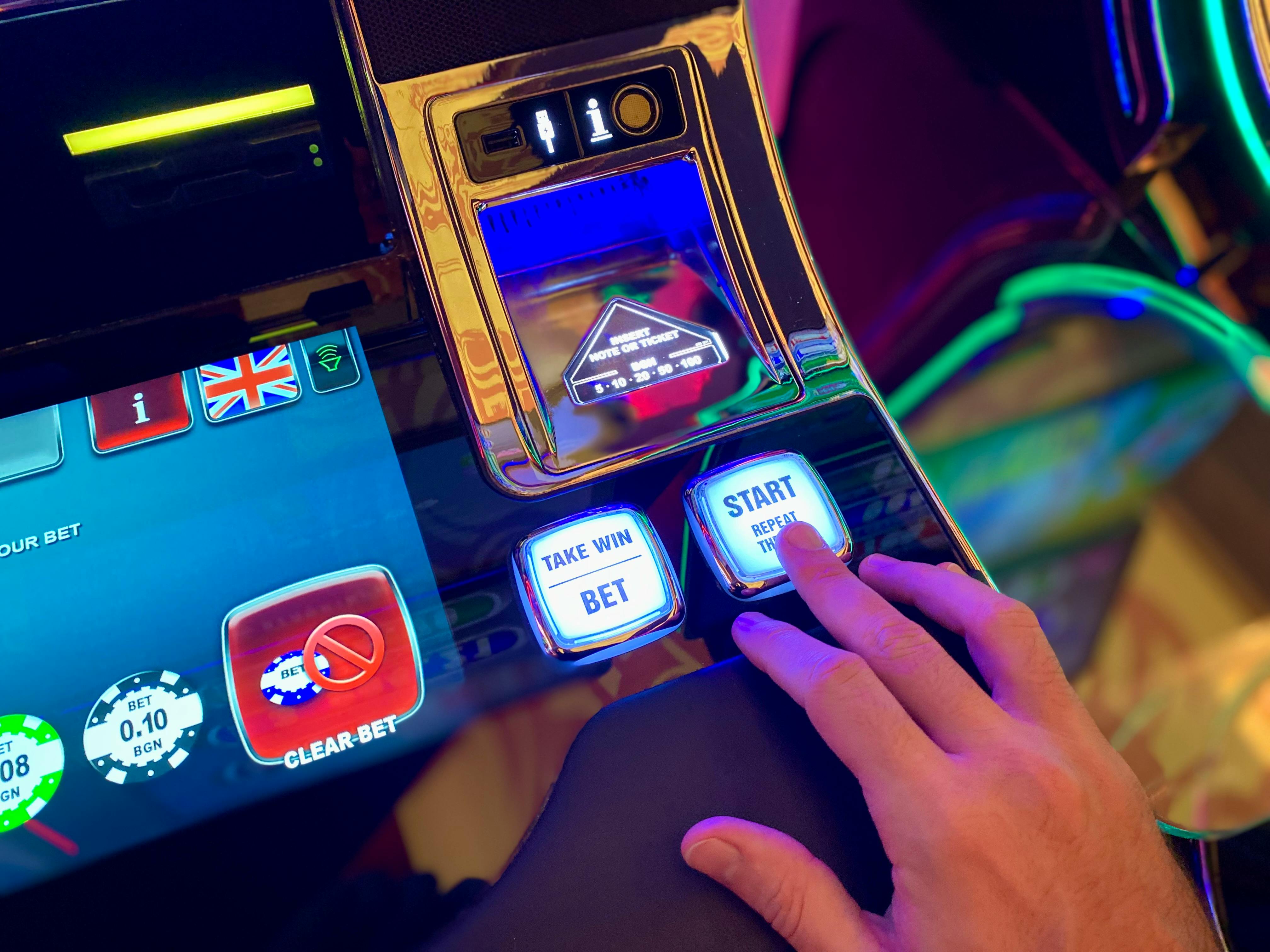
The interface is arranged into well-defined categories that enable you to discover your preferred experience efficiently. You will find a broad selection of video slots spanning from classic three-reel fruit machines to modern multi-line titles with cascading reels and progressive jackpots. Table game enthusiasts can enjoy multiple variants of blackjack, roulette, baccarat, and poker, each with various rule sets and betting limits. The live casino section broadcasts real dealers from professional studios, providing games like Lightning Roulette and Infinite Blackjack with interactive chat features. We also offer a selection of instant-win scratch cards and virtual sports for fast sessions between major events.
Offers, Deposits, and Account Management
What should I review before claiming a welcome bonus?
Before you claim any promotional offer, check three specific details that establish its real value to you. First, examine the wagering requirement, which tells you how many times you must play through the bonus amount before winnings become withdrawable cash. Second, verify the game weighting table, because slots typically account for one hundred percent toward wagering while table games and live dealer titles often contribute a much lower percentage or are excluded entirely. Third, consider the time limit for completing the wagering requirement and any maximum bet restriction during bonus play. These conditions are displayed transparently in the promotional terms section, and we encourage you to read them fully so you can make an informed decision about whether the offer suits your playing style.
What payment options are supported and how long do withdrawals take?
We support the payment methods that Canadian players prefer most, including Interac e-Transfer, Visa and Mastercard debit and credit cards, and several popular digital wallets. Interac e-Transfer deposits typically show up in your account within a few minutes, though your banking app’s processing speed can add a short delay. Withdrawal processing times change by method, with Interac e-Transfer payouts typically finalized within one to three business days after the internal review period. Digital wallet withdrawals are often faster once your account has been fully verified. The first withdrawal you make will require identity verification documents, which is a standard regulatory requirement across all licensed Canadian operators, and we handle these checks as quickly as possible to cut down on any waiting time.