
Can a Wallet Predict Danger? How Transaction Simulation Changes the Game for DeFi Power Users

What if your wallet could run your transaction in a safe sandbox and tell you exactly what will change before you hit “Confirm”? That proposition sounds like a small convenience until you frame it against the real costs of blind signing: drained approvals, swapped tokens you didn’t intend to sell, or unexpected gas burn on the wrong chain. Transaction simulation—executing a predictive, read-only dry run of a signed transaction client-side or via a node—turns an opaque, irreversible blockchain operation into an intelligible, inspectable event. For experienced DeFi users managing multi-chain portfolios and complex approvals, that clarity can be the difference between a high-risk optimization and a catastrophic loss.
This explainer walks through the mechanisms of transaction simulation, why it matters for power users in the US DeFi scene, how Rabby implements it as a practical defense-in-depth measure, where the approach helps and where it doesn’t, and the decision heuristics you can use when choosing a wallet that promises pre-signature visibility.
Mechanism: what transaction simulation actually does
At the technical level, transaction simulation is a read-only execution of the intended transaction on a node (local, remote, or a service provider). It does not submit the transaction to the mempool; instead it computes the state transition the real transaction would cause: token transfers, method calls, reverted branches, and estimated gas consumption. There are two common implementations: client-side simulation, where the wallet reconstructs the call and executes it against a cached state or light node; and remote-node simulation, where the wallet sends the unsigned transaction to a trusted RPC node that returns the hypothetical result.
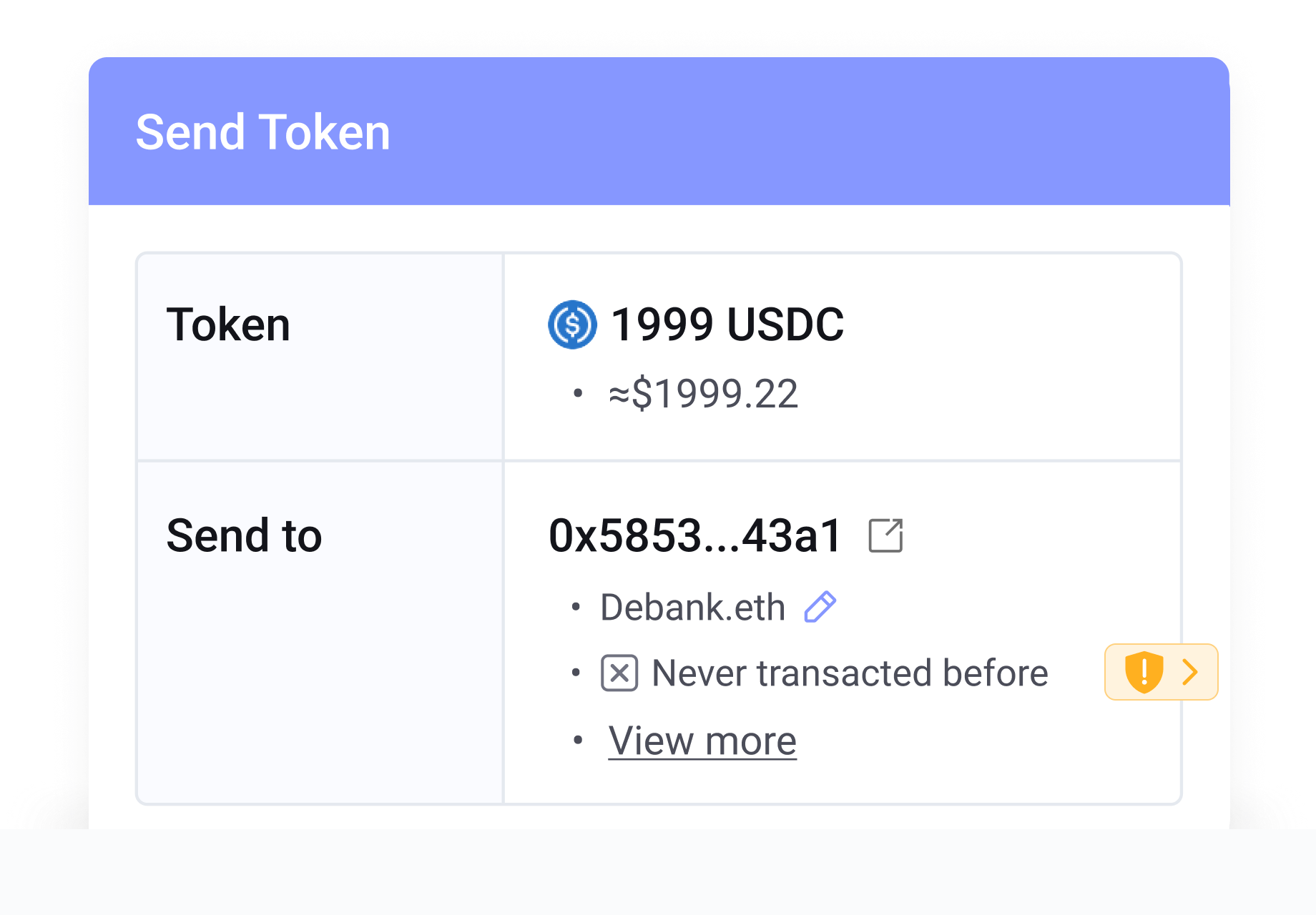
For the user, the simulation output is translated into actionable facts: “If you sign, your USDC balance goes from X to Y, you will spend Z gas in ETH, and these contracts will receive allowances.” That is different from a simple human-readable ABI decode of the call data—simulation shows concrete balance deltas and the likely success or revert path. Rabby adds a layered security engine around this core: it simulates the transaction and then cross-checks the simulation results against a threat database (e.g., flagged contracts, prior exploits) and common harmful patterns like infinite approvals or approvals to non-contract addresses.
Why it matters for DeFi power users
Power users are doing things that multiply risk: batched transactions, interacting with composable protocols across many chains, and granting temporary approvals to contracts they may not control. Two aspects make simulation valuable:
1) Predictability under composability. When a single action triggers a cascade across AMMs, wrappers, and bridge contracts, gas accounting and final token balance are non-linear. A simulation that reports exact token deltas lets you assess slippage and sandwich risk in advance.
2) Approval hygiene. A surprising share of on-chain losses are from approvals left open to malicious contracts. If a simulation surfaces that a transaction will create or expand an allowance, you can cancel or shorten it before signing—especially useful when combined with a native revocation tool.
In Rabby’s case, transaction simulation is paired with automatic network switching and multi-chain visibility, which lessens user friction for cross-chain operations and reduces human errors like executing on the wrong network (an easily overlooked but costly mistake). For institutional users integrating multisig solutions (Gnosis Safe, Fireblocks, etc.), simulation brings pre-approval auditing value into the workflow.
Limits and failure modes: where simulation doesn’t save you
Simulation is not a magic bullet. First, it depends on the accuracy and freshness of the state used for the dry run. If the node you simulated against is slightly behind, front-running or rapidly changing liquidity can render the simulation optimistic—especially for low-liquidity pairs or time-sensitive bridge operations. Second, simulation cannot predict off-chain oracle behavior that can be manipulated between your simulation and the real execution window; oracles and MEV (miner/extractor value) dynamics introduce uncertainty that the simulation cannot eliminate.
Third, simulation outputs are only as useful as the wallet’s ability to communicate them. A simulation that reports JSON primitives or complex revert traces without clear interpretation is of little help to most humans. Rabby’s design attempts to translate simulation results into plain balance deltas and risk flags, but any user must still interpret the meaning—e.g., why a token delta is smaller than expected: slippage, price impact, or a partial fill behavior of the contract.
Finally, simulation relies on privileged data flows: many wallets use remote RPC providers for simulations, which concentrates trust. An open-source wallet architecture mitigates this (anyone can review the code), and Rabby’s MIT-licensed codebase allows external audits, but it does not obviate the operational risk of compromised nodes or stale state.
Trade-offs: what you gain and what you pay for
Security vs. Convenience. Simulations add latency and complexity. A wallet that simulates every transaction must either accept slower UX or prefetch simulation results and cache them. Rabby tries to balance this by making the simulation a pre-step and by automating network switching to avoid user friction. The trade-off is that added protection may slightly slow rapid, high-frequency ops.
Visibility vs. False alarms. A thorough simulation plus a conservative risk engine will surface many potential issues, some of which are benign in context. That increases cognitive load: users may encounter alerts that are technically accurate but operationally irrelevant (e.g., approval to a new but legitimate router contract). The design challenge is to prioritize actionable, high-signal alerts while allowing power users to override or silence noise when they understand the trade-offs.
Practical decision heuristics for power users
When evaluating a wallet for transaction-simulation quality, consider these heuristics:
– Look for balance-delta reporting, not just decoded calldata. A clear before/after token snapshot is the most decision-useful piece of information.
– Prioritize wallets that combine simulation with explicit approval controls (revocation tooling) and hardware wallet integrations—this creates a coherent workflow for inspecting and then safely authorizing sensitive operations.
– Prefer open-source projects that publish how simulations are executed (client-side vs. remote RPC) and which threat feeds the risk engine uses. Transparency reduces but does not remove operational trust.
For readers who want to try a simulation-capable wallet, see how rabby bundles simulation, approval revocation, automatic network switch, and hardware wallet support into a single user flow—features that materially reduce common user errors on EVM chains.
Non-obvious insight: simulation changes the optimal mental model
Most users treat a transaction as “I call X, it happens.” Simulation shifts the mental model to “I can observe the state transition before committing.” That matters because it turns many security problems from prevention to inspection: rather than solely blaming an exploit on the contract, you can ask whether the wallet exposed the balance change and approval intent before signing. This reallocation of responsibility forces tool designers and power users to adopt new workflows—inspection first, signing second. It also changes developer incentives: dApp authors will increasingly be judged by how straightforward their UX is under simulation, not just by their on-chain contract clarity.
What to watch next (signals, not guaranteed timelines)
Three conditional scenarios to monitor:
– If wallets integrate more robust local simulation (running against light clients or light-state caches), the trust surface will decentralize and latency could drop—good for high-frequency traders who need quick, safe confirmations.
– If simulation outputs become standardized (machine-readable balance-delta formats and risk flags), third-party auditor tooling and institutional dashboards will plug into the workflow, improving compliance and multisig review speed.
– If MEV and oracle volatility remain significant, simulation alone will not prevent subtle losses caused by latency; combining simulation with transaction relays, private mempool options, or bundling services may be a next layer of defense—and a likely area of private-public tooling development to watch.
FAQ
Does simulation guarantee my transaction is safe?
No. Simulation reduces several classes of human and contract-level error by revealing concrete state changes and flagging known malicious patterns, but it cannot predict MEV, oracle manipulation between simulation and execution, or off-chain events that affect the transaction. Treat simulation as a strong but partial defense in a layered security posture.
How does simulation affect gas estimation and cost surprises?
Simulations produce gas usage estimates and approximate fee costs, which cuts down on surprise reverts and underpricing. However, final gas used can differ due to network conditions or changed execution paths; for very time-sensitive or complex interactions, add a margin to your gas strategy and consider quicker relay mechanisms if available.
Can simulation help with batch transactions and multisig workflows?
Yes. For multisig and batched operations, simulation lets every signer inspect the net effect before consenting. When combined with institutional integrations like Gnosis Safe or Fireblocks, it becomes a practical pre-approval audit step. But teams should confirm which node or state source the simulation used so all signers share the same trust assumptions.
Does Rabby’s simulation protect against the same risks as other wallets?
Rabby distinguishes itself by showing estimated token deltas and integrating pre-transaction risk scanning and revocation tools, plus automatic network switching and broad hardware wallet support. That combination reduces several common user errors. Still, its limitations mirror the ecosystem’s: no built-in fiat on-ramp, no native staking inside the wallet, and residual exposure to oracle/MEV risks.