
Inside Solscan: A Practical Guide to the Solana Blockchain Explorer

Okay, so check this out—Solscan is one of those tools that feels obvious once you use it, but somethin’ about it keeps surprising me. Whoa! It surfaces transaction details fast, and the layout makes probing a block or account painless even for folks who are new to Solana. My first impression was: clean and fast. Initially I thought speed would be the only thing that mattered, but then I realized search ergonomics, token metadata, and tooling for devs are what really separate explorers.
Here’s what bugs me about some explorers: they hide context behind buttons. Really? Solscan, by contrast, lays out program calls, logs, and inner instructions inline so you can trace what happened without jumping through too many hoops. You can see fees, rent, and compute units all together—super useful when you’re debugging a failing swap. On one hand that’s great for transparency; on the other hand, it can be overwhelming if you’re just trying to confirm a transfer. I’m biased, but I prefer that overload to mystery.
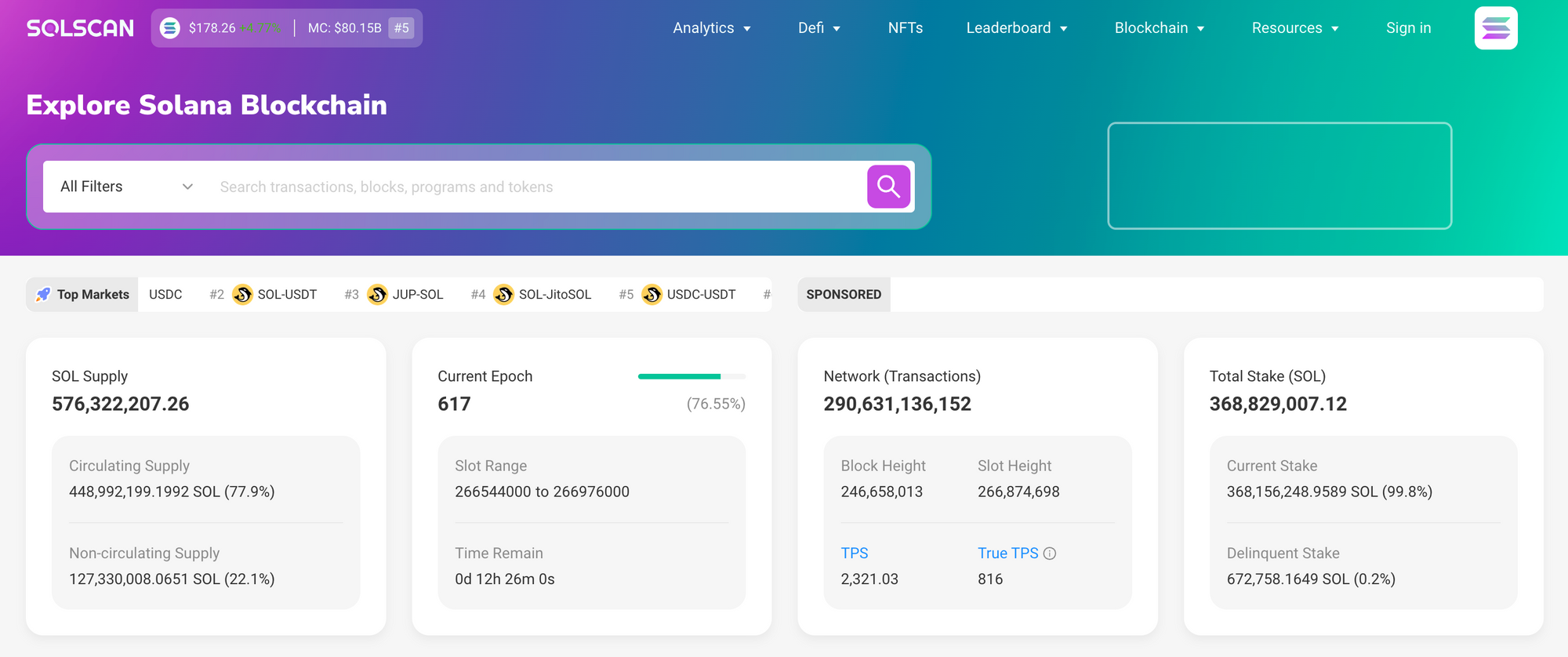
When you land on Solscan, start by pasting an address or tx signature into the search box. Hmm… the site then returns a timeline of events and token movements with token balances and program interactions grouped cleanly. For NFT folks, it shows token metadata and image previews where available, which saves you time. Actually, wait—let me rephrase that: the NFT preview is nice, though sometimes metadata sources are flaky and you’ll need to cross-check.
How I use Solscan day-to-day (and how you can too)
First, I use it to verify deposits and withdrawals in client support threads; second, I use it to inspect program logs when a transaction fails; third, I use the token tracker to watch supply and holders. Wow! The token page is very very detailed—contract info, holders list, and transfer history all in one place. For dev workflows, the “Instruction” panels are a godsend because they show decoded instruction data when supported by known programs. On balance, Solscan hits both casual and technical needs without feeling like two different products.
If you want the official Solscan landing page and more details, go here: https://sites.google.com/cryptowalletextensionus.com/solscan-explorer-official-site/ Seriously, the official site links to features and announcements that most users miss. My instinct said it was just a mirror at first, but the site collects updates and tips that help you use the explorer smarter. Also, pro tip: bookmark the developer/API section if you pull data programmatically.
On the analytics side, Solscan offers charts for supply, volume, and holder distributions. Hmm… these are lightweight compared to full analytics platforms, though they’re great for quick sanity checks. Initially I thought charts were basic, but I’ve used them to catch token rug behavior or suspicious holder concentration. Something felt off about one token’s distribution recently and the holder chart made the pattern obvious. That saved me a longer digging session.
Privacy-conscious readers should be aware: explorers by design make chains readable; Solscan simply presents that data in a friendlier package. Really? Yes—blockchain transparency is a feature, not a bug, but watch what you post in on-chain memos. On one hand this means audits and investigations are possible; on the other hand it means casual wallet linking is easier than you’d think. Keep sensitive actions off-chain where appropriate.
For builders, Solscan exposes an API and CSV export for transactions and token holders. Whoa! That API is useful for project dashboards and quick reward calculations. Initially I thought rate limits would be a blocker, but if you plan properly (and cache aggressively), it’s manageable. Actually, wait—some endpoints are undocumented, so expect to experiment a bit. If you’re integrating at scale, consider running your own indexer or using official RPCs alongside Solscan snapshots.
There are a few rough edges: metadata fetches sometimes rely on external hosts, and rare UI hiccups crop up under heavy load. Hmm… when the cluster is busy some queries time out and you may need to retry. I am not 100% sure why certain token images fail to load, but usually re-indexing or file hosting fixes it. (oh, and by the way…) support channels are responsive, but community forums often have the quickest fixes.
FAQ: Quick answers
Can Solscan decode program instructions?
Yes—when Solscan recognizes a program it shows decoded instructions and inner calls; otherwise you’ll see raw data. If you’re building a custom program, adding an ABI-like decoder or publishing your program spec helps explorers decode more reliably.
Is the data trustworthy?
Solscan reads on-chain data—so it’s as trustworthy as the blockchain itself; errors are usually display or metadata issues rather than ledger problems. I’m biased toward double-checking with another explorer or an RPC query for mission-critical ops.